
1/4 Routine Plan
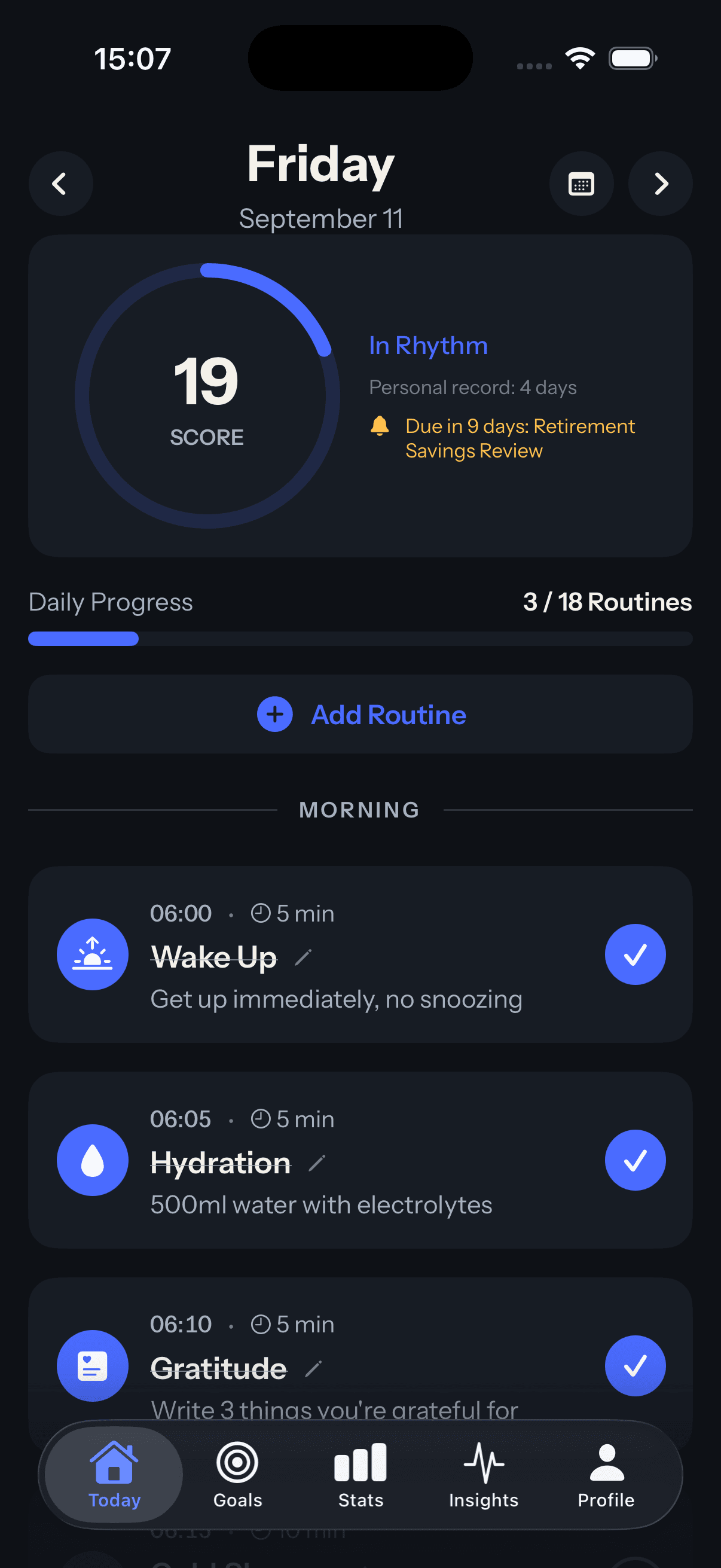
Does this sound familiar?
This isn't a discipline problem.
Why does this happen?
Your dopamine system rewards the actions that used to keep you alive. The modern world hijacked it.
Dopamine helps explain the pattern. Dopafy helps you change it.

Dopamine used to reward the actions that kept you alive. You're exhausted from the hunt. Then you spot fresh mammoth tracks, and the drive is back instantly: you're closer to the goal. Eat the mammoth, and your brain remembers: that hunt was worth it. Apps, feeds and ultra-processed food trigger that same system today, just without the hunt in between. They deliver the reward directly, unpredictably, always available. Work and exercise tap into the same system. Just slower, with real effort in between. In comparison, they often lose.
Product
Dopafy helps you put your dopamine system back to work for what it was built for: building drive and reaching your goals.
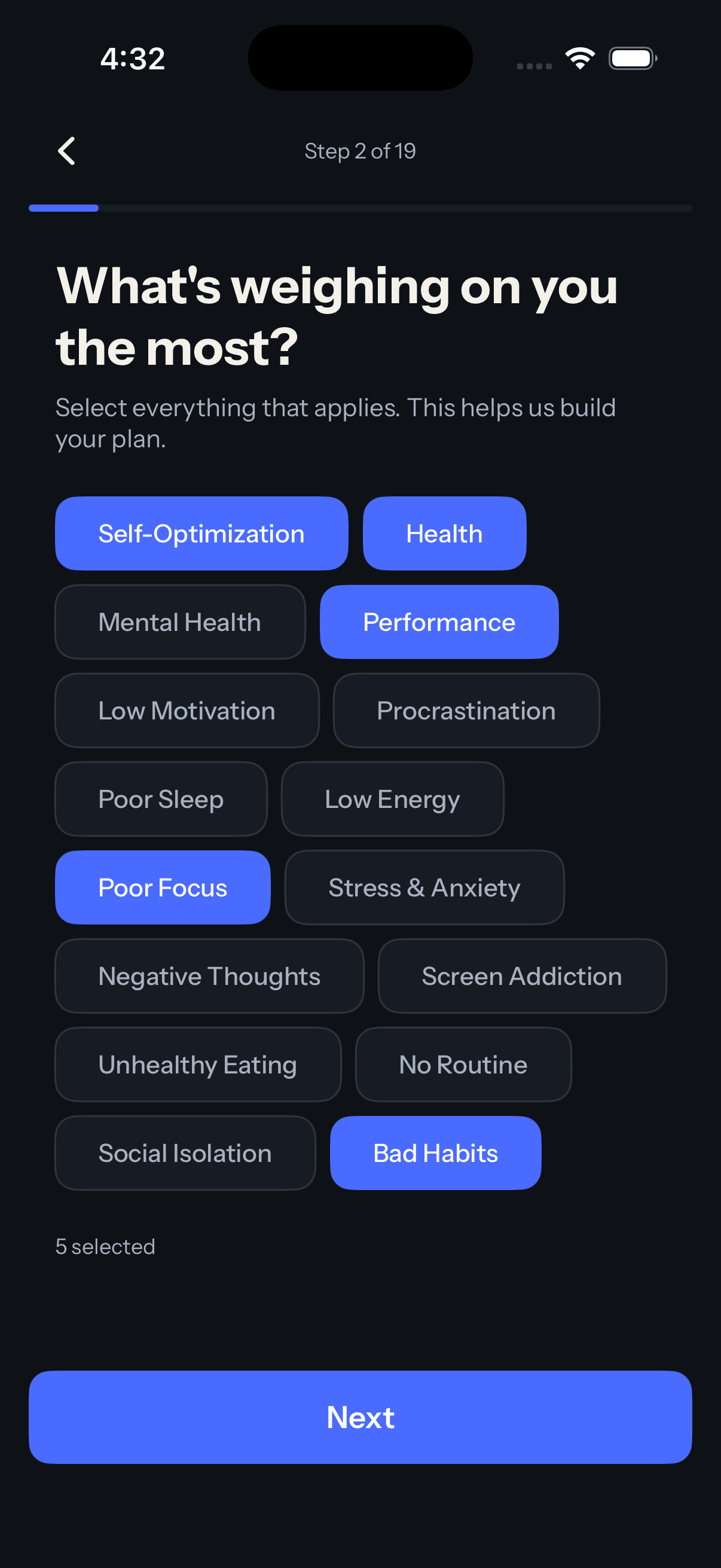
Before anything can change, what's actually shaping your behavior needs to become visible: triggers, patterns, timing. Dopafy surfaces these patterns instead of guessing at them.
The Routine Plan helps you create the conditions to feel focused, energized and balanced, so following through on your goals becomes easier.
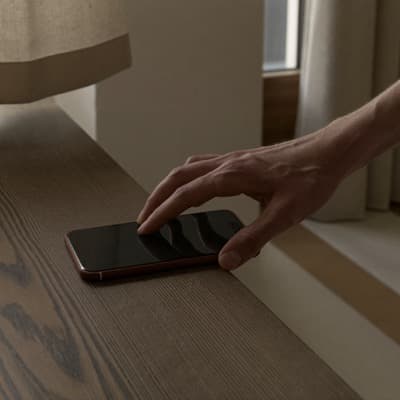
Did you choose it, or did it choose for you? Every notification and every feed is built to hijack your dopamine system in exactly that moment. Screen Blocking, Focus Blocks and Digital Sunrise/Sunset make it harder for those distractions to override the decision you actually made.
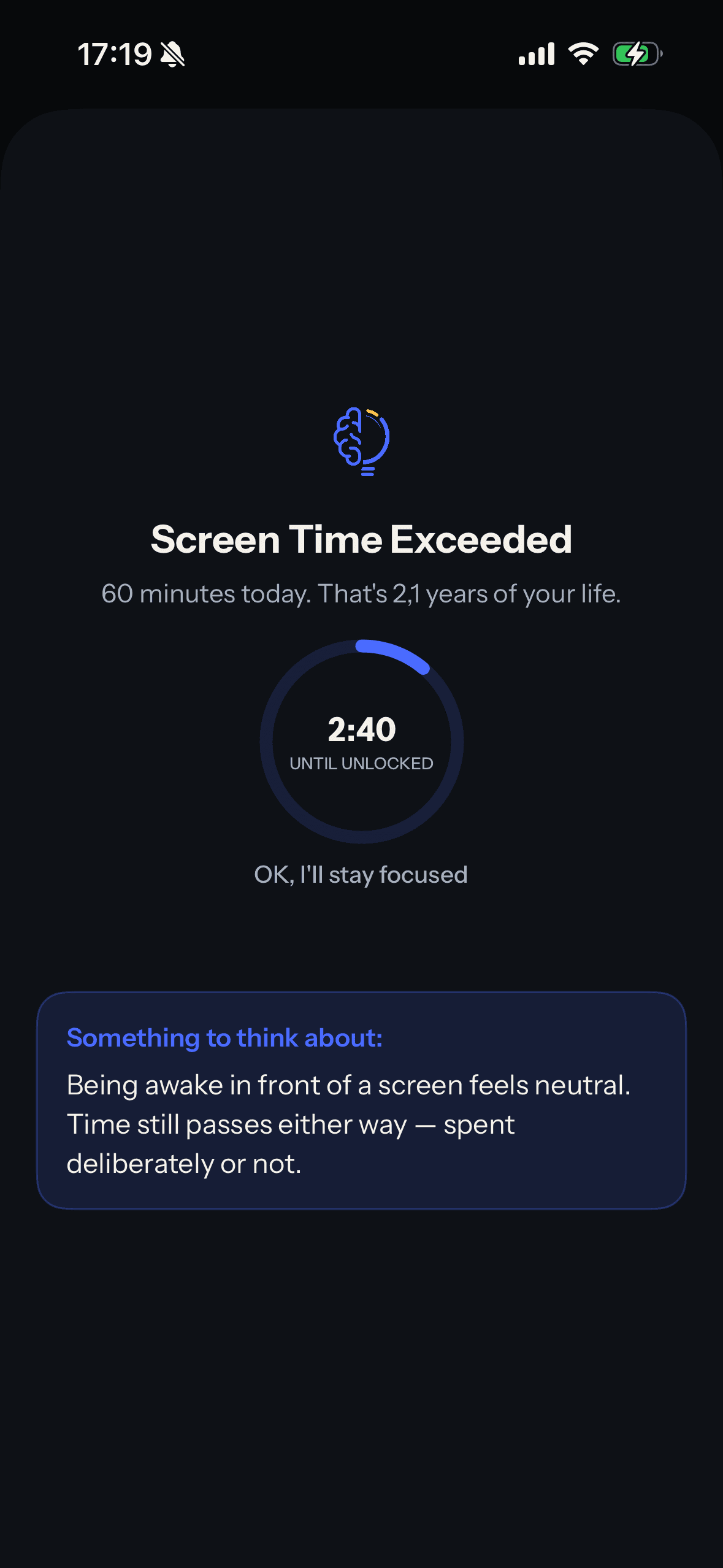
The score shows your current daily performance. Your stats break down exactly which dimensions you're consistently following through on.
Habit trackers, screen-lock apps, and health wearables each solve one piece. Dopafy covers all three.

Apps that help you build and stick with good habits: tracking, reminders, small rewards.
Apps that block distraction and bad habits: app locks, focus modes, screen-time limits.
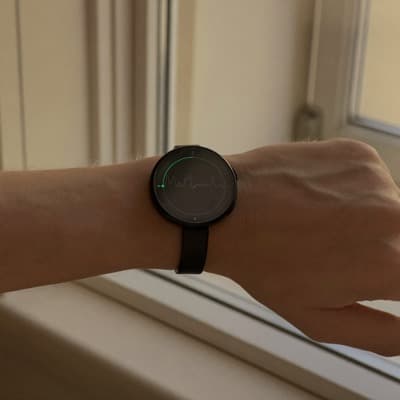
Apps and wearables that keep an eye on your vitals and recovery: sleep, heart rate, recovery.
| Streaks | Opal | Whoop | Fabulous | Dopafy | |
|---|---|---|---|---|---|
| Habit tracking | ✓ | – | – | ✓ | ✓ |
| Blocks distraction & bad habits | – | ✓ | – | – | ✓ |
| Health/recovery tracking | – | – | ✓ | – | ✓ |
| Personalized plan | – | – | – | ✓ | ✓ |
| Platform | iOS | iOS/macOS | iOS/Android + wearable | iOS/Android | iOS |
| Starting price | $5.99 one-time (no free tier)* | Free: 1 rule · from $19.99/month for more* | from $199/year (no free tier)* | Free: limited · from $39.99/year for full access* | Free · Premium €5.99/month |
*US App Store reference prices, as of September 2026. Local prices may vary. Apple Health/Fitness+, Oura, and Apple Watch deliberately not listed: recording devices with no coaching of their own. Dopafy reads their data via HealthKit sync and builds routines on top.
The science behind it
Dopafy is grounded in habit-formation research. Three numbers that show why structure makes the difference:
66days
Median time until a new behavior becomes automatic (with a wide individual range from 18 to 254 days).
Lally et al., 2010, European Journal of Social Psychology
43%
Of daily actions run on habit, not active decision-making.
Wood, Quinn & Kashy, 2002, Journal of Personality and Social Psychology
70% vs. 35%
How much more often people reach their goals when they report progress regularly instead of just setting a goal, twice as often.
Matthews, Dominican University of California
Day 1
Start
Day 21
Familiarity
Day 42
Momentum
Day 66
Automatic

Fair questions
Why Dopafy exists
I started Dopafy after noticing how often my own behavior no longer matched what I actually wanted. I would reach for my phone without consciously deciding to, and before difficult or strategically important work I often found myself clearing my inbox or completing easier tasks first.
A seven-week dopamine challenge made those patterns much more visible. Reducing automatic social-media use left me feeling calmer, more focused and more present. But understanding the pattern was not enough. I needed a system that could protect my intentions in the moment and actively build the conditions that helped me perform well.
I went deeper into neuroscience, reward learning, habits, sleep, focus and performance, spoke with neuroscientists during the challenge and while developing the product, and began building my own daily "dopamine schedule". That evolved into Dopafy: a system for routines, focus, protection, learning and progress that I started using every day.
It helped. Dopafy grew from that personal experiment into a system designed to help others turn intention into action and build a life that better matches their ambition.
(Founder, Dopafy)
Ready?
Start with Dopafy today, free. An optional premium upgrade unlocks advanced features.
Start for freeFrequently asked questions


