Knowledge · Alex Alber · June 5, 2026
Dopamine isn't a happiness hormone: the dopamine schedule for more focus
Seven weeks without artificial dopamine. Full focus, stable energy all day, a balance I hadn't felt before. That was the result of a seven-week challenge, staying away from artificial dopamine sources as much as possible. The effect was so clear that I had to dig deeper.
What actually is dopamine, how does it work, and how can you raise it without ending up running on empty? Dopamine isn't a happiness hormone. It drives motivation and drive, and it's released before an event even happens. Once you understand how the system works, you also understand why some days feel easy and others feel exhausting.
Dopamine isn't a happiness hormone
A simple example: you're hungry and want to eat. You search for the nearest restaurant. A kebab place with 4.7 stars is close by. Dopamine is released. You see it's only 6 minutes by bike instead of 31 by train. Dopamine again. You reach the place, the line is short. Dopamine, once more.
So dopamine is already produced before the actual event happens. Evolution explains this easily: hunting a mammoth, simply spotting a footprint could release fresh energy and help secure survival.
Our dopamine system doesn't just secure survival, it drives every kind of goal. Get a step closer to a goal, and dopamine is released to keep you going. That makes even big challenges feel doable. Without dopamine, even writing an email can feel like hunting a mammoth.
So the question is: how do we use this system deliberately, so everything feels a bit lighter?
The dopamine baseline paradox
If dopamine gives us that much drive, why not do everything possible to get as much of it as we can? That's exactly how our modern world works. Social media, sugar, fast food, alcohol, nicotine, streaming, pornography. All of it releases dopamine.
The problem: after the release, the level doesn't stay constant. It drops again, usually below where it started, and how fast it drops depends on how fast it rose. Modern dopamine sources trigger an immediate spike that feels good in the moment. A moment later, the level falls below baseline, and we feel empty and unmotivated. The only way out feels like one more piece of chocolate, one more beer, one more cigarette, more scrolling. That's a business model, which is exactly why the modern world is built around it.
Picture your dopamine reserve as a pool. The more waves in the pool, meaning the more dopamine spikes, the more water spills over the edge. The overall level drops, and eventually the reserves run dry and we feel burned out. Artificial dopamine isn't only a problem because of dependency, it's also a problem because the receptors go numb. Dopamine from natural sources, from actually reaching your own goals, barely registers anymore.
But there are ways to lift your dopamine level without triggering unhealthy spikes.
The dopamine schedule
There are ways to trigger dopamine naturally, without causing a crash, and they fit easily into a normal day. I call this the dopamine schedule.
- 1. Hydration. Start the day with at least 0.5 liters of water and electrolytes. We dehydrate overnight, and you need to make up for that in the morning to perform at full capacity.
- 2. Morning walk. Movement and sunlight trigger dopamine. Dopamine drives a natural cortisol release, and cortisol is what wakes you up.
- 3. Cold shower. Up to 250% more dopamine for up to 4 hours, documented for cold water immersion.
- 4. Breakfast. Protein is the base material for dopamine production. Rough guideline: 1.5 to 2 grams of protein per kg of bodyweight per day.
- 5. Coffee. Wait at least 2 hours after waking up before your first coffee. Caffeine blocks the receptors that clear adenosine, and if adenosine isn't cleared, an afternoon slump is close to guaranteed.
- 6. Digital sunrise. Wait at least 2 hours before touching your phone, or at least social media and news. Your brain shouldn't get used to an artificial dopamine hit being the first stimulus of the day.
Dopafy: my first product
Dopafy grew directly out of this article. Researching the dopamine schedule was the starting point, not the other way around. I wanted to actually live by this system, and there was no simple tool for it. So I built one.
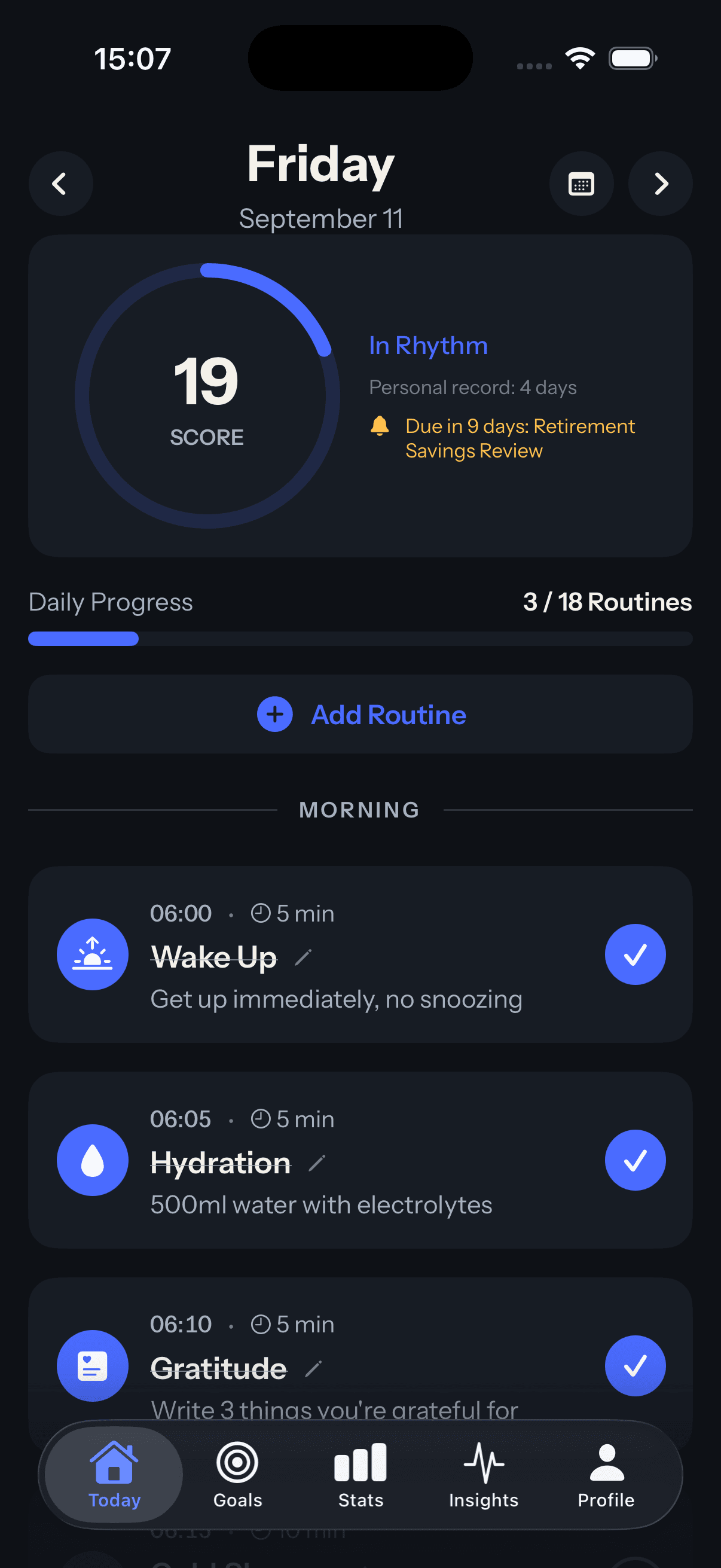
Dopafy tackles exactly that: how do you manage your dopamine budget to raise your energy level and work more focused? The app tracks routines, learns from your own patterns, and shows you where the biggest lever is.
Personalized routines: plan your day so your dopamine level stays in the optimal range all day.
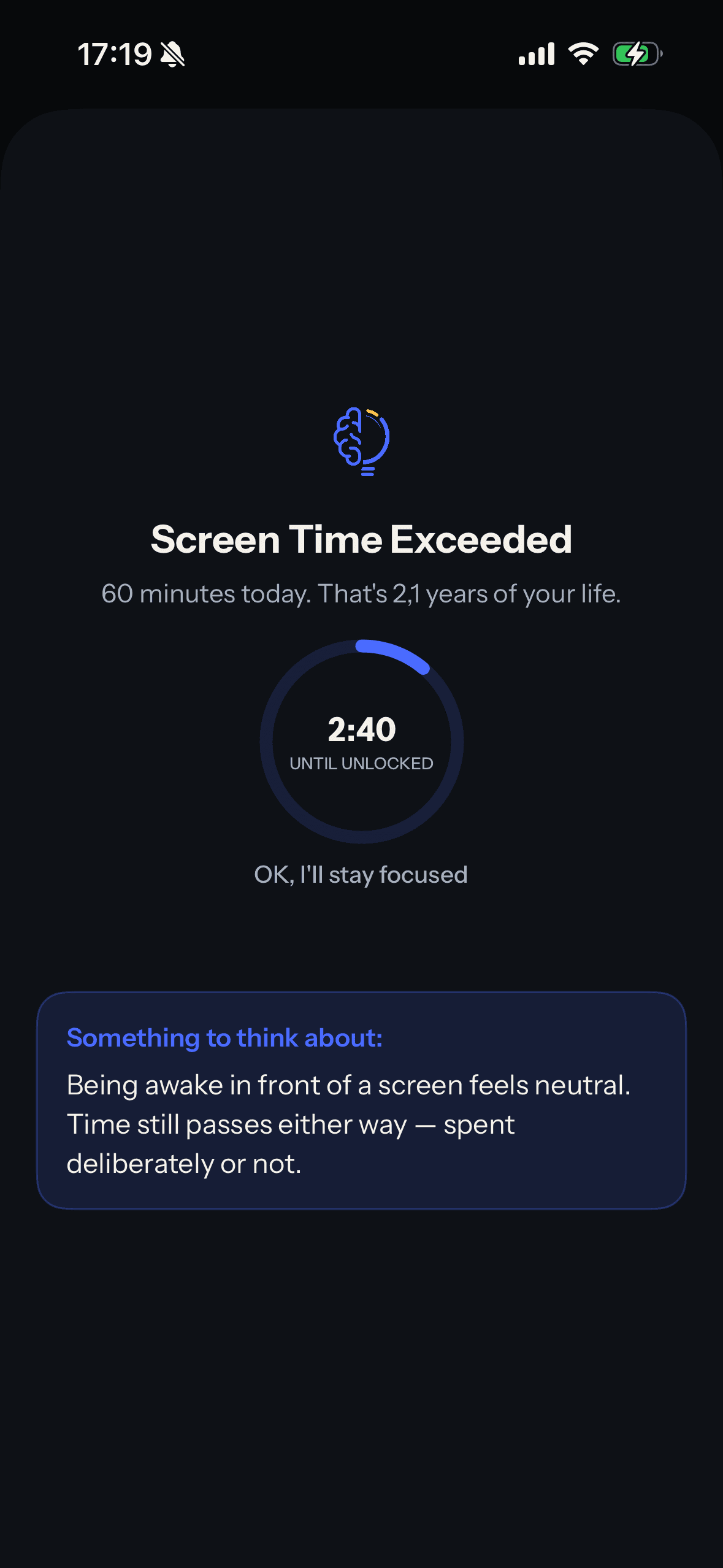
Screen time & app blocking
Block the apps that drain your dopamine reserves before artificial dopamine turns into a habit.
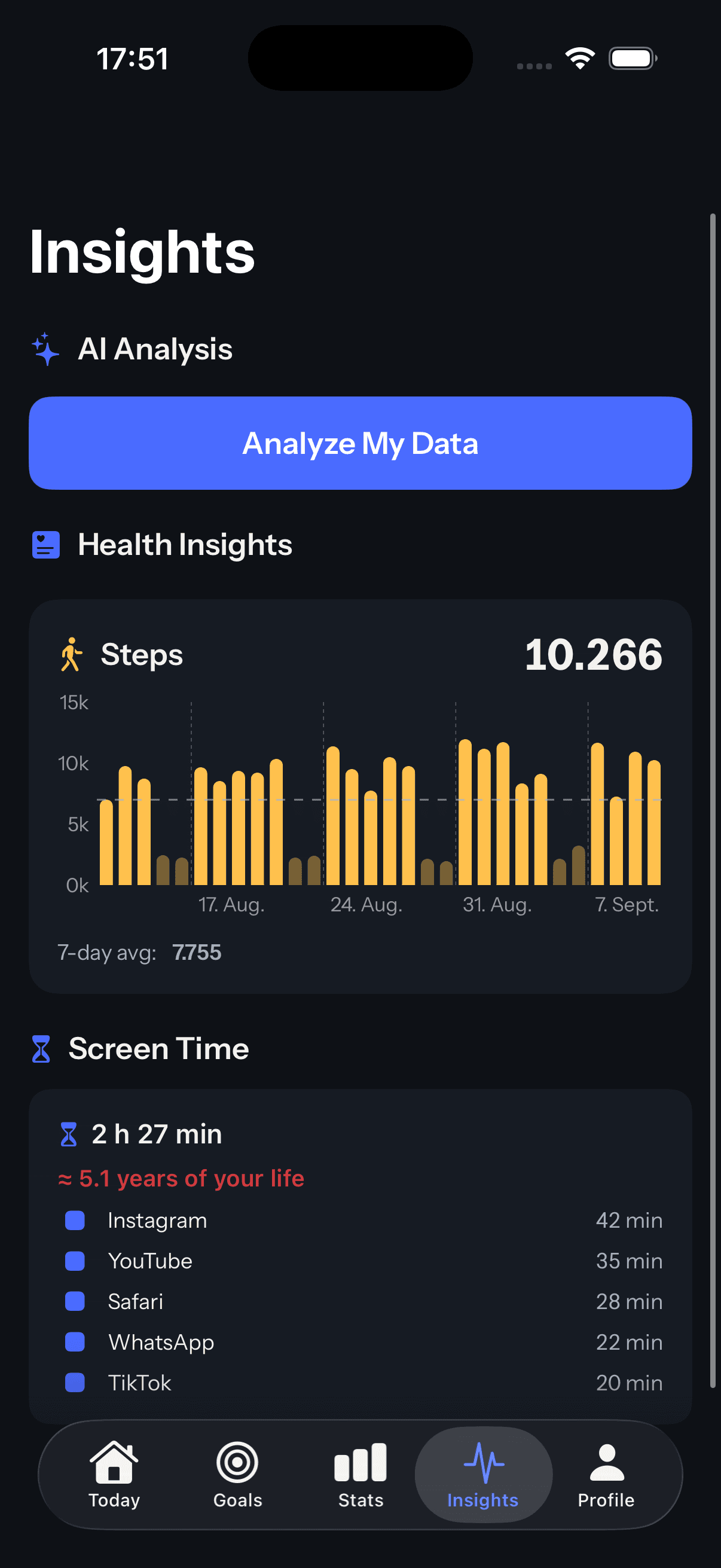
AI analysis & recommendations
Understand how small changes in your daily routine affect behavior, energy, focus, and wellbeing.
The data collected in the app stays on your phone and is never stored by us. A deliberate design choice, to keep the barrier to using it low.
Your challenge for this month
This month, try to establish three behaviors that have a positive effect on your dopamine budget. No phone in the morning, no sugar, cold showers, a morning walk. Pick only three, for real.
Get through the first 30 days, and the next 30 get easier. After 66 days, a routine turns into a habit and usually stops taking willpower.